
Blog Details
Cloud Innovations for Spend Analytics from SAP and Partners
Key Innovations by SAP in Spend Analytics / Spend Management
-
SAP Spend Control Tower
-
Central “source of truth” for all spend data: combines payment, supplier, procurement?, travel?/expense? etc. SAP+2SAP News Center+2
-
AI/ML?enabled spend classification, supplier enrichment. SAP+2SAP News Center+2
-
Preconfigured dashboards with relevant KPIs; ability to merge SAP & non?SAP data sources. SAP+1
-
Tracking not just cost but also risk, sustainability / ESG / diversity spend. SAP+2SAP News Center+2
-
-
Generative AI / Copilot “Joule”
-
Integrated into SAP Ariba, SAP Business Network, SAP Fieldglass, Concur, etc. SAP News Center+3SAP News Center+3SAP News Center+3
-
Assists with:
• Creating / enhancing RFPs, Request for Proposals. SAP News Center+1
• Summarizing supplier data, providing recommendations. TechTarget+1
• Generating job descriptions or Statements of Work (SOWs) more quickly (Fieldglass). SAP News Center+1
• Helping with routine inquiries, policy guidance. SAP News Center+1
-
-
AI?Driven Risk & Sustainability Analytics
-
Supplier risk assessment embedded into source?to?settle workflows (sourcing, contracting, buying) to detect third?party risk. SAP News Center+2SAP+2
-
Sustainability scorecards: carbon footprint, ESG metrics, diversity of supplier base, and ability to report on “green spend.” SAP News Center+2SAP+2
-
-
Analytics Add?Ons / External Workforce Insights (Fieldglass)
-
New analytics module for SAP Fieldglass which provides:
• Over 50 KPIs for external workforce management.
• Predictive / benchmarking features (market rates, demand/supply for talent) plus sustainability & compliance insights. SAP News Center+1
-
-
Better Data Integration, Data Fabric, & Unified Analytics Platforms
-
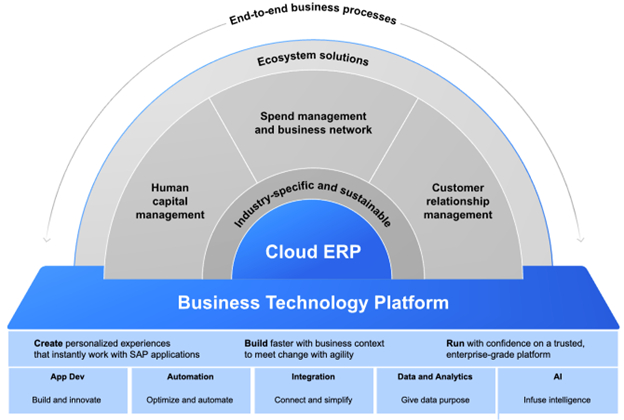
Use of SAP Business Technology Platform (BTP) / SAP Datasphere to bring together data from multiple sources. SAP+3SAP News Center+3SAP News Center+3
-
SAP’s vector engine in HANA Cloud, knowledge graphs, closer integration between planning, analytics, master data etc. to enable richer queries, more flexible modeling. SAP News Center+1
-
-
Partner?Based Solutions & Ecosystem Extensions
-
McKinsey’s Spendscape built on SAC + SAP BTP: provides procurement analytics, real?time visibility across supply chain, helping clients see spend + emissions, enabling faster time to insight. McKinsey & Company
-
SAP encouraging partners (through hackathons, partner innovation initiatives) to build pre?built data models, semantic views, enhanced integration & transformations (especially for sustainability and industry use cases) in Data Warehouse Cloud / Datasphere. SAP Community
-
Why These Matter / What Trends They Reflect
-
Moving from disconnected spend / procurement systems to unified spend visibility (merging SAP & non?SAP, spend across travel, external workforce etc.).
-
Embedding AI/ML to reduce manual effort, improve speed (e.g. classification, supplier discovery, summary).
-
Using spend analytics not just for cost control but also for risk management, ESG / sustainability, supplier diversity.
-
Faster time to insights — “time to data” shrinking. Instead of months of integration / cleansing, maybe days. McKinsey & Company
-
Self?service analytics: letting non?technical users explore, query, get recommendations.
What to Watch / Potential Challenges
-
Data quality & semantic consistency: classification of spend is hard, especially across many categories, geographies, currencies, suppliers. Even with AI, garbage in → garbage out.
-
Integration of non?SAP or legacy systems: many organizations have fragmented systems; bringing them all into SAP Datasphere or unified model may require significant migration / cleanup.
-
Trust & explainability of AI models: especially for risk / ESG scoring; users will want to audit or understand why a supplier is flagged.
-
Performance / scale: large enterprises with huge volumes of spend & data will test the limits of dashboards, latency etc.
-
Change management: procurement / finance teams used to older workflows may resist or under?utilize new tools unless well trained.
Possible Directions & “Next?Gen” Innovation Areas
Based on what SAP + partners are doing, and where spend analytics tends to go, here are some areas likely to evolve further:
-
Pre?built “accelerators” or “content packs” for specific industries or regions (e.g., for energy, manufacturing, pharma; for India / APAC) that include relevant KPIs, supplier risk data sources, ESG metrics etc.
-
More powerful natural?language / conversational analytics: ask in plain language “show me suppliers in India with high risk & above X spend” and get charts & summaries. (Joule is heading this way.)
-
Predictive / prescriptive spend analytics: not just what happened, but what will happen (e.g., cost inflation, risk events, supplier performance), and what you should do (e.g., shift sourcing, consolidate suppliers).
-
Deeper supplier ecosystem analytics: mapping relationships among suppliers, dependencies, supply chain vulnerabilities.
-
Automated “spend optimization opportunities” suggestions: identifying tail spend, mis?categorisation, leakage, contract compliance, etc.